

Edge AI Gaming Audio Cue Enhancement technology analyzes game audio in real time and selectively enhances critical cues such as footsteps, running, reloads, doors, and distant gunfire. Adaptive processing improves the audibility of subtle sounds without s

Edge AI Gaming Audio Cue Enhancement technology analyzes game audio in real time and selectively enhances critical cues such as footsteps, running, reloads, doors, and distant gunfire. Adaptive processing improves the audibility of subtle sounds without simply increasing the overall volume.
Spatial cues such as ITD and ILD, together with HRTF-based information, are preserved to maintain directional and distance perception. Low-latency, on-device processing enables integration into gaming headsets, sound cards, monitors, and other gaming audio hardware.
The technology processes rendered game audio only and does not access game packets, internal game data, or hidden positional information. Deployment can be configured according to platform- and tournament-specific requirements.
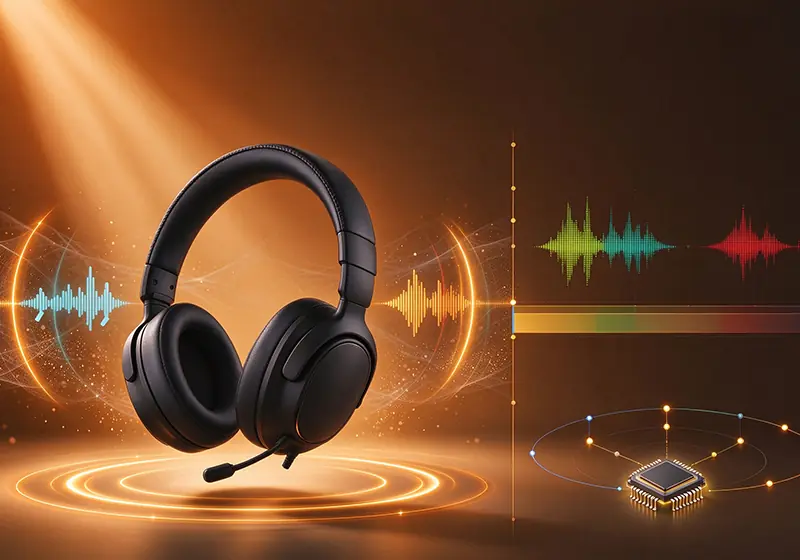
Detects and selectively enhances footsteps, movement, reloads, doors, gunfire, and other critical in-game audio cues.

Reduces the masking effect of explosions, background music, and intense combat audio on quieter sound cues.

Designed to preserve ITD, ILD, and HRTF-based spatial information while enhancing selected audio cues, helping maintain directional and distance perception.
Real-time processing with peak and dynamic-range management improves clarity without relying on excessive overall amplification.
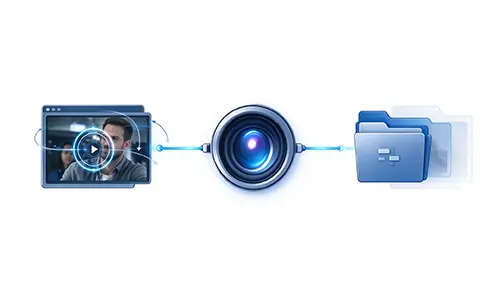
Supports Competitive, Immersive, and Night modes and can work alongside existing EQ, HRTF, and virtual surround technologies. Flexible SDK integration supports OEM / ODM development across a wide range of gaming audio products and hardware platforms.

Enhances footsteps and other critical sound cues while preserving spatial information for more accurate in-game positioning.
Adds real-time audio cue enhancement and loudness management to external gaming audio hardware.
Adds tactical cue enhancement and spatial optimization to built-in monitor audio for console and PC gaming.
Improves directional awareness and sound clarity across gaming audio accessories and external devices.
Provides low-latency, on-device audio enhancement for compact gaming platforms with limited hardware resources.
A: It is an on-device AI audio technology that selectively enhances important in-game sound cues in real time. It improves the audibility of footsteps, movement, reloads, door actions, distant gunfire, and other relevant cues without simply increasing overall game volume.
A: The algorithm dynamically enhances relevant audio cues that may be masked by explosions, gunfire, background music, or other dense game audio. Adaptive masking control improves cue clarity while maintaining the overall balance of the game soundscape.
A: The technology is designed to preserve spatial information used for direction and distance perception. Interaural Time Difference (ITD), Interaural Level Difference (ILD), and Head-Related Transfer Function (HRTF) cues can be retained while selected sounds are enhanced, helping maintain accurate positional audio.
A: No. The algorithm processes rendered game audio only and does not require access to game packets, internal game data, or hidden positional information. Deployment can also be configured according to platform-specific or tournament-specific compliance requirements.
A: Yes, subject to the target audio architecture. The technology can be integrated alongside existing EQ, HRTF-based spatial audio, virtual surround, and other audio processing modules, with processing order and parameters tuned for the target product.
A: No. Core processing runs locally as on-device AI, enabling low-latency real-time enhancement without requiring game audio to be uploaded to the cloud. The technology is suitable for gaming headsets, USB audio devices, sound cards, gaming monitors, and other embedded gaming audio products.
A: Yes, subject to platform compatibility. Integration mainly depends on the chipset, available CPU/DSP/NPU resources, audio architecture, and latency requirements. SDK integration, cue-category tuning, and platform-specific optimization can be provided, with configurable modes such as Competitive, Immersive, and Night to support different product strategies and listening scenarios.
A: Contact us for a platform compatibility assessment, sample audio evaluation, or SDK documentation.