

Edge AI Speech Enhancement Edge AI-Powered Speech Enhancement improves voice clarity and intelligibility in calls, meetings, gaming, live streaming, and voice interaction by separating target speech from background noise and interference. The algorithm co
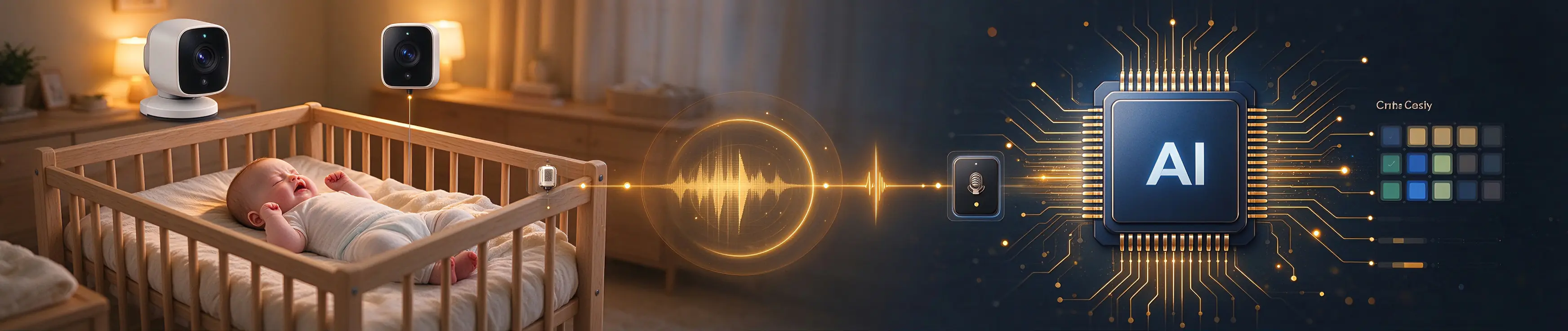
Edge AI-Powered Speech Enhancement improves voice clarity and intelligibility in calls, meetings, gaming, live streaming, and voice interaction by separating target speech from background noise and interference.
The algorithm combines AI noise reduction, voice isolation, and dereverberation to handle both steady and rapidly changing noise while preserving natural voice characteristics and speech detail. When used with a microphone array, the technology can also leverage beamforming and sound-source direction information to further enhance target speech and suppress interference from other directions.
Designed for lightweight on-device real-time processing, it supports low-latency deployment across headsets, conferencing devices, smart audio products, and other embedded platforms.

Suppresses steady and non-stationary noise such as fans, traffic, keyboard sounds, wind, and surrounding conversations.
Improves speech intelligibility and detail while minimizing distortion and unnatural artifacts caused by over-processing.

Focuses on target speech while reducing interfering voices and room reverberation. With a microphone array, beamforming and sound-source direction information can further improve target speech capture and suppress interference from other directions.
Streaming inference supports real-time calls, gaming voice chat, and other interactive audio applications.
Lightweight models can be optimized for DSP, SoC, and other embedded platforms to meet different compute and product requirements.

Enhances microphone voice clarity while reducing keyboard, fan, background speech, and environmental noise during voice chat.
Improves speech intelligibility for business headsets, speakerphones, and conferencing systems in offices, homes, and shared spaces.
Improves uplink speech quality in wind, traffic, and other changing outdoor noise conditions.
Enhances far-field speech capture and voice clarity for smart speakers, voice assistants, and interactive devices.
Enhances target speech and reduces environmental interference for personal sound amplification and hearing-support applications.
Provides real-time speech enhancement for in-vehicle communication and other embedded voice applications.
A: It is an on-device AI audio algorithm that enhances target voice clarity by reducing background noise, interference, and reverberation in real time. Designed for headsets and other intelligent audio devices, it improves speech intelligibility while preserving natural vocal characteristics.
A: Yes. With a dual- or multi-microphone array, the technology can leverage beamforming and sound-source direction information to further enhance target speech while suppressing interference from other directions.
A: Many classical noise-reduction methods rely on signal-processing rules or statistical assumptions, while AI-based speech enhancement learns speech and noise patterns from data. This enables more adaptive separation of target speech from non-stationary background noise while maintaining voice clarity and naturalness.
A: Yes. The technology is designed for changing acoustic conditions such as offices, homes, public spaces, and gaming environments with background noise or room reverberation. Actual performance depends on microphone configuration, acoustic conditions, input signal quality, and the target hardware platform.
A: No. Core speech enhancement runs locally as on-device audio AI, and audio does not need to be uploaded to the cloud for processing. This reduces latency and can support privacy-sensitive product designs, while cloud connectivity or storage remains a separate system-level option.
A: Yes, on compatible hardware. The algorithm is designed for real-time embedded deployment and can be optimized for continuous operation based on the available processing resources, audio configuration, and power budget of the target device.
A: Yes, subject to platform compatibility. Key factors include the chipset and available CPU/DSP/NPU resources, microphone configuration, and existing audio processing architecture. SDK integration, parameter tuning, and platform-specific optimization can be provided for the target device.
A: Typical applications include gaming headsets, business and conference headsets, communication devices, smart audio products, and other voice-enabled hardware requiring real-time speech enhancement. The technology can be adapted to different embedded audio platforms according to their computing and audio resources.