

Edge AI-Powered Baby Moment Detection enables smart baby monitors and smart cameras to automatically identify meaningful moments from daily video footage. By analyzing baby expressions, milestone-related moments, and family interactions, It generates hig
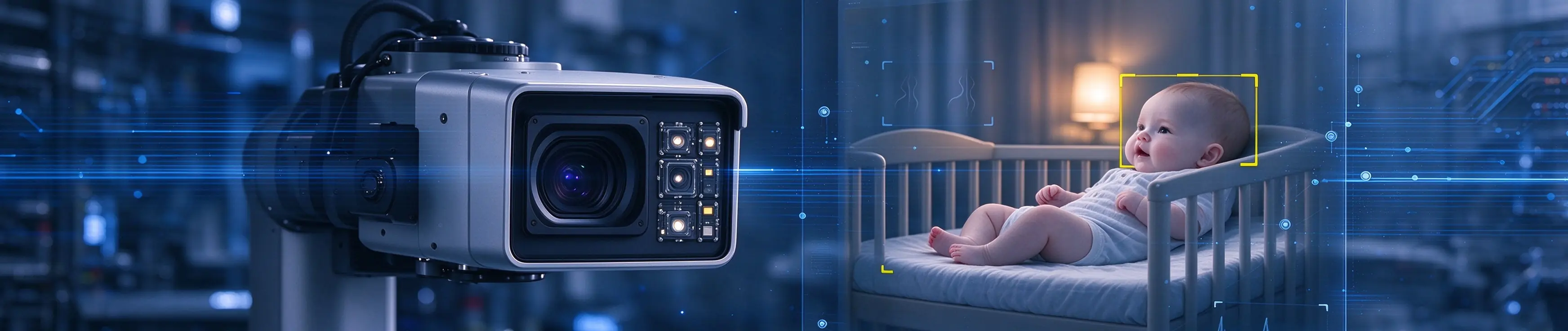
Edge AI Baby activity detection and recognition enables smart baby monitors and smart cameras to automatically identify meaningful moments from daily video footage.
By analyzing baby expressions, milestone-related moments, and family interactions, It generates highlight images, short clips, and event tags, supporting features such as growth timelines, personalized memory, and monitoring.Designed for on-device deployment, video analysis can run locally to support privacy-sensitive applications and reduce cloud dependency.
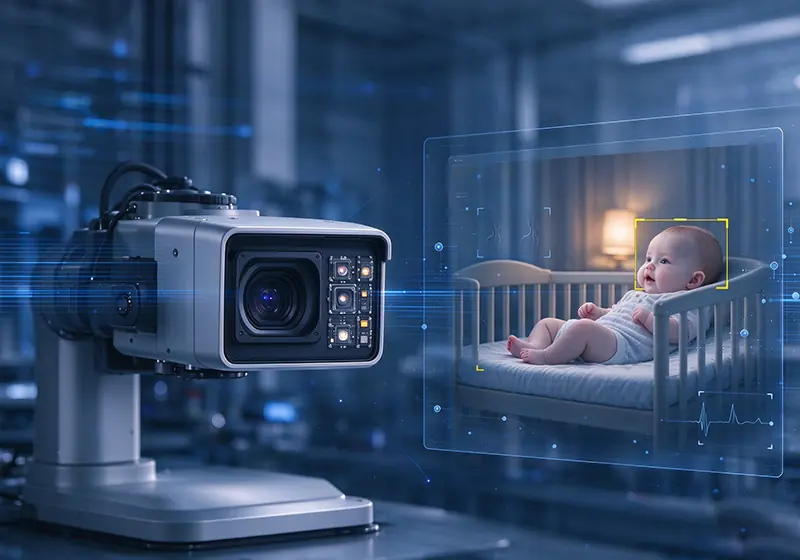
Detects smiles, family interactions, and milestone-related moments such as rolling, crawling, standing, and walking.

A lightweight front-end model can run continuously and trigger higher-accuracy models only when candidate events are detected, enabling on-demand compute allocation for always-on and battery-powered devices.
Optional audio cues such as laughter, babbling, clapping, and parent voice can be combined with visual signals to improve the reliability of event interpretation.
Selects key frames based on image quality and motion, groups related events, and reduces repetitive content.
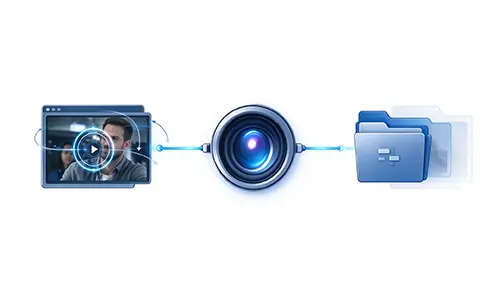
Supports customizable event labels, age-related categories, and preference rules for different product requirements.
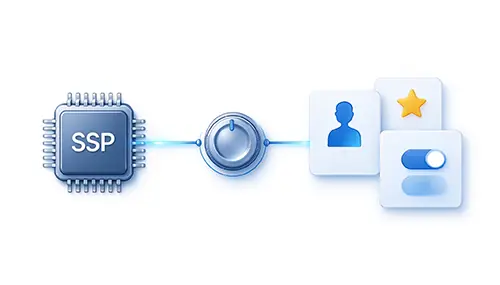
Adds milestone recognition, highlight generation, and growth timeline features.
Enables intelligent moment detection, event tagging, and smart video review.
Extends AI event recognition to family monitoring, elderly care, and pet-related scenarios.
Integrates customizable AI capabilities into companion, education, and other smart camera products.
A: It is an on-device AI technology designed for AI baby monitors, baby cameras, and other smart family care devices. By combining visual and audio analysis, it recognizes meaningful moments such as smiles, laughter, babbling, clapping, movement, and parent-baby interactions, helping devices automatically select and save relevant highlights.
A: The technology supports configurable visual and audio event detection, including smiles, laughter, babbling, clapping, movement, and parent-baby interactions. It can also recognize selected milestone-related moments such as rolling, crawling, standing, and walking, depending on the target product requirements.
A: Yes. Visual signals such as facial expressions and body movement can be combined with audio cues including laughter, babbling, clapping, and parent voice. This multimodal approach improves the reliability of event interpretation and helps distinguish meaningful moments from ordinary daily activity.
A: No. Core AI processing runs locally as on-device AI, and video or audio does not need to be uploaded to the cloud for moment detection. This reduces latency and can support privacy-sensitive product designs, while cloud storage, remote viewing, or synchronization remain separate system-level options.
A: Yes, on compatible hardware. A lightweight front-end model can run continuously and trigger higher-accuracy models only when candidate events are detected, enabling on-demand compute allocation and reducing unnecessary processing. This architecture is designed for always-on and battery-powered devices with limited compute and power budgets.
A: The system uses event scoring, highlight selection, clustering, and deduplication to reduce repetitive or low-value recordings. Rather than saving every detected event, it prioritizes representative moments and generates a more concise set of highlights.
A: Yes. Detection categories, event priorities, and highlight rules can be configured according to product design and user preferences. For example, an AI baby monitor may prioritize smiles, laughter, parent-baby interactions, or selected milestone-related moments.
A: Basic motion or sound detection identifies whether movement or audio activity has occurred. Baby Moment Detection goes further by interpreting the event itself and distinguishing meaningful moments such as smiles, laughter, babbling, clapping, or parent-baby interactions from routine background activity.
A: Typical applications include AI baby monitors, smart baby monitors, baby cameras, family care cameras, smart home cameras, and other intelligent vision devices designed for infant monitoring or family interaction. The technology can be adapted to different hardware platforms based on available camera, audio, and AI compute resources.
A: Yes, subject to platform compatibility. Integration feasibility mainly depends on the chipset, available AI compute resources, camera and microphone interfaces, operating system, and target resolution and frame rate. SDK integration, model adaptation, parameter tuning, and platform-specific optimization can be provided for the target platform..